
Super Freak Guitar Loop: Tackling a Full-Band Sound with One Guitar and a Loop Station
Building a complete band sound from just one guitar and a loop station is a technical challenge that requires precision, patience, and practice. For those who’ve mastered the basics of looping, the next hurdle is recreating a full-band arrangement like Rick James’ iconic “Super Freak” – a true test of skill and creativity.
The Engineering Behind the Art
Live looping’s got a new jam: Super Freak Guitar Loop. Rick James’ iconic riffs are a staple of ’80s funk and our latest track brings them into the present with a chunky, pocket-filling sound. The key to this full-band, no-backup-production arrangement lies in the modular build process – each layer is recorded as a loop, stacked on top of the previous one, creating a rhythmic cell that grows into a complete band sound.
We’re talkin’ body percussion, bass, harmony, and lead, all comin’ from the same source. It’s like we’ve got an entire band at our fingertips – no need for backing tracks or AI to get the job done. My guitar and my loop station are the perfect combo for this type of production, allowin’ us to create a rich, glassy sound that’s all our own.
Music as Iterative Design
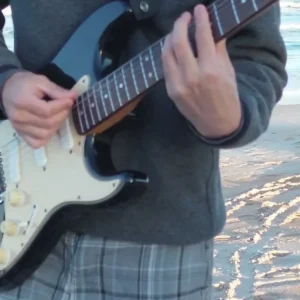
Live looping is all about building from a solid foundation. Think of it like iterative engineering design – you start with a simple idea (the rhythmic cell), then experiment and iterate to add complexity (layers). With each loop added, the arrangement grows into something new. Just like how an engineer refines their design, I’m refining my sound on this beach – layer by layer.
The process is all about trial and error. What works? What doesn’t? That’s where the magic happens – in the experimentation. When it all comes together, that’s when you know you’ve got something special. Like Rick James’ iconic Super Freak Guitar Loop, which still gets me pumped up to this day. I’m always pushing the limits of what’s possible with just one guitar and a loop station.
Super Freak Guitar Loop
The Power of One Guitar
The one-guitar constraint actually gives you more freedom to experiment and get creative with your sound. It’s like having a limited budget – you gotta be smart about how you use every resource. By stripping away the distractions of multiple instruments, you can focus on crafting the perfect layer for each part of your track. The result is a genuine, humanized sound that doesn’t feel like it’s trying too hard to replicate the full band experience.
When I’m working on a loop like Super Freak Guitar Loop, I try to tap into the same spirit of resourcefulness as Rick James himself. Those iconic guitar riffs are all about finding the sweet spot between chunky rhythms and melodic hooks – and that’s exactly what I aim for when building out my own live looping arrangements.
Navigating the Arrangement of Super Freak
Managing Thick Overdubs: To keep your guitar loops from sounding like a messy pileup, focus on distinct frequency ranges. Assign each sound to its own ‘headroom’ in the mix, whether that’s through careful EQ and compression or using different techniques for rhythm and lead parts. For example, if you’re playing chunky bass lines and smooth chords, try limiting the low end with a parametric EQ before applying compression. This way, your bass sits neatly beneath your rhythm guitar without clashing.
Transitioning from Rhythm to Lead: When moving from rhythmic base layers to melodic lead parts, start by stripping away unnecessary frequencies. Focus on a narrow mid-frequency band (around 200-300 Hz) for a smooth, singing tone that cuts through the mix. This is especially key when playing lead parts with a lot of vibrato and bends – precision EQing helps your sound sit nicely above other instruments.
Super Freak Guitar Loop: To capture the essence of Rick James’ iconic guitar riff in Super Freak, try using a combination of percussive strumming and picking techniques. Focus on delivering crisp, staccato hits with a slightly crunchy tone to evoke the song’s funky vibe. Use your loop station’s effects to create space between notes, making sure each hit has its own ‘breath’ before moving into the next phrase – this will give your part that unmistakable funk feel.
Navigating the Arrangement of Super Freak
Maintaining Clarity in the Overdub
Clarity’s the key to a killer loop. When you’re building up layers on top of each other, it’s easy to lose yourself in the mix. That’s where sonic headroom comes in – think of it as breathing room for your sound. If you don’t leave some space between frequencies, everything starts to bleed into each other and gets muddy. In a complex loop like Super Freak Guitar Loop, that can be disastrous. You need to make sure each instrument has its own frequency range, so they sit nicely together without getting lost in the mix. My loop station’s got some clever processing tricks up its sleeve for this exact problem – it’s all about separation at the source.
From Verse to Chorus Without Changing the Loop
When building a live loop like Super Freak Guitar Loop, it’s essential to create distinct rhythmic and melodic layers that shift with the verse and chorus. Dynamic layering is key – adding more notes, density, or phrasing changes can help convey these shifts without breaking the loop.
For example, using my guitar’s high-frequency settings for a chunky rock rhythm in the verse can give way to funk-inspired strumming in the chorus, where I emphasize percussive muting. The addition of harmonies and arpeggios in the choruses also helps distinguish it from the verses.
In this arrangement, I’ve kept the loop’s core elements – like the driving bass line and pounding drums – consistent throughout both sections, while manipulating the top layers to create a clear contrast between verse and chorus. This blend of rhythmic continuity and melodic shift results in a seamless transition that keeps the audience engaged.
Super Freak Guitar Loop: The Groove That Got Me Hooked
My guitar and I have been having a blast playing Rick James’ classic hit “Super Freak” – that iconic bassline is impossible to resist. I’ve always loved the way it combines funk, rock, and pop into one funky package. It’s a great example of how a simple groove can become so infectious.
Ready to Raise the Bar on your playing? If you are looking to master the One Man Band process or find loop building videos for other songs, check out more live loop tutorials.
Explore other Intermediate Live Loop Tutorial loops


Explore other loop covers of Rick James
No videos available.

