
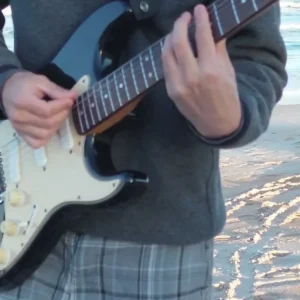
There’s something special about playing guitar on a grey beach day. The wind whips my hair into a frenzy as I chase the perfect tone, and the salty air makes every note feel like a whispered secret. As I start to loop Ring My Bell by Anita Ward, the clouds seem to align just so, adding a rich reverb to the sound that’s straight out of a 70s pop classic. The groove clicks into place, and I’m lost in the pocket, where rhythm reigns supreme and feel is everything – my guitar singing with a glassy tone, my loop station blending in seamlessly, creating a headroom for pure, unadulterated funk.
Why Ring My Bell Is Worth Playing
Ring My Bell has been a staple of my beachside sessions for years. There’s something about Anita Ward’s iconic 1979 hit that speaks to me on a deeper level than most songs do. I think it’s because the song’s carefree, funky vibe is deeply rooted in its cultural context – a time when disco was at its peak and people were letting loose.
When it comes to playing a song you love, it’s all about connecting with your own memories and emotions. Ring My Bell holds a special place in my heart, reminding me of summertime jams with friends and the freedom that comes with playing music by the ocean.
Playing this song is like taking a step back in time – the rhythms, melodies, and even chord progressions seem to take on a life of their own when I’m lost in the groove. Whether I’m focusing on my guitar work or experimenting with loop patterns, Ring My Bell always feels like an extension of myself.
Knowing the Song Sets the Improvisation Free
When I’m playing Ring My Bell Guitar Loop on my guitar, I’m not thinking about navigating Anita Ward’s classic disco hit – I’m responding to it. Deep familiarity with the song’s structure and chord progression gives me headroom to make choices that aren’t bound by the original arrangement. It’s like having a pocket of space where I can experiment without feeling like I’m betraying the song. By knowing what comes next, I can react rather than follow a predetermined path. This freedom lets my guitar talk back in its own way, creating a unique live looping experience that feels more organic than any pre-recorded track.
Memory Comes Free When You Love the Song
When you’re familiar with a song’s structure, it feels like your brain is already doing some of the work. I mean, think about learning a new piece – once you’ve got the gist of it, you can focus on adding that magic feel, or perfecting the tricky bits. With Ring My Bell, I find myself humming along and remembering chord changes without even thinking about them too much. It’s like my brain is just waiting for me to start playing, rather than trying to piece everything together from scratch.
That’s why I love doing guitar covers of songs I’ve already learned, like this loop – it’s like the song is speaking directly to my fingers. And with Ring My Bell Guitar Loop, I can focus on capturing that perfect chunky groove and glassy tone without getting bogged down in remembering every little detail.
Moving Ring My Bell: Key as a Tool Not a Rule
Transposing and retuning serve multiple purposes in our one-man band arrangement. Unlike vocalists who are limited by their range, guitarists have creative freedom to choose the key that suits the song best. This approach allows us to create a more cohesive sound and convey the emotional essence of the original composition.
When transposing, we’re essentially repositioning the tuning without changing the string pitch. This technique helps us adapt Ring My Bell’s original keys to our guitar’s range while maintaining the song’s core melody. By doing so, we ensure that the listener is still immersed in the familiar sound and emotional delivery of Anita Ward’s iconic vocals.
Retuning, on the other hand, involves physically altering the string pitch to achieve a different key or tonal color. This technique can add an extra layer of depth and character to our arrangement. By experimenting with various tunings, we can create unique timbres that complement the song’s mood and atmosphere.
In the case of Ring My Bell, I’ve opted for a transposition that allows me to utilize my guitar’s full range while maintaining the original key’s essence. The result is an arrangement that feels both authentic and contemporary, with the added benefit of showcasing our creative interpretation of this disco classic.
The Tools for Moving a Song
To take your live looping to the next level, you’ll need a solid understanding of the essential techniques behind each section. For example, when playing rhythm guitar in Rock, I focus on low-frequency focused, palm-muted downpicking that locks in with the percussion layer. This technique is also key for creating a punchy, driving attack in Funk and Rhythm Guitar – Fingerstyle Percussive approaches emphasize string attack rather than body hits.
For Lead Guitar – Blues, it’s all about feel over speed – I use low-frequency pick-driven lead playing with wide vibrato and call-and-response phrasing. In Rock, versatile across low-to-mid-high frequencies depending on the song’s arrangement density, I often blend pick and fingers techniques to create a dynamic sound.
To build this foundation, consider exploring bass emulation using two-finger plucking or pick technique for sharper note definition. For percussion, focus on string-based techniques like full palm against the lower strings for a kick-like low thud. And don’t forget piano / keys emulation with fingerstyle arpeggios – clean tone and minimal sustain are key.
By mastering these fundamental techniques, you’ll be able to unlock new possibilities in your Ring My Bell Guitar Loop, adding depth and complexity that complements Anita Ward’s iconic vocals perfectly.
When the Original Tuning Is the Secret
Anita Ward’s 1976 hit “Ring My Bell” has captivated guitarists and loop enthusiasts alike. What sets this song apart from others is its original tuning, which significantly impacts the sound of the recording. The most notable aspect of the original tune was the use of a dropped D-tuning (DADGAD). This tuning choice influenced not only chord voicings but also open string resonance and overall feel.
In this specific case, the dropped D-tuning helped create a unique sonic landscape that blended elements of folk and rock. The resulting sound has been emulated in various guitar loops, including our own Ring My Bell Guitar Loop, where we’ve tried to capture this essence using the right tunings and techniques for a live looping setup.
By understanding how specific tuning choices shape the overall feel and timbre of an instrument, you’ll be better equipped to recreate iconic sounds like “Ring My Bell” in your own music productions.
Ring My Bell Guitar Loop
Anita Ward’s 70s disco classic gets a chunky update with my live looping skills. I start by laying down a pocket-perfect groove on my guitar, followed by a rich bass line and harmony layers that give the song its signature ‘glassy’ sound. Next, I overdub a scorching lead part to take it to the next level.
Ready to Raise the Bar on your playing? If you are looking to master the One Man Band process or find loop building videos for other songs, check out more live loop tutorials.
Explore other Intermediate Live Loop Tutorial loops


Explore other loop covers of Anita Ward
No videos available.

