
When I set out to loop Englishman In New York, I knew it was a challenge that required a solid understanding of sound design and timing discipline. Can you build a full-band arrangement from scratch using just your guitar and a loop station? It’s not as easy as it sounds – and that’s exactly what makes this version so exciting!
The Engineering Behind the Art
When you strip away the production sheen from Englishman In New York’s iconic guitar riff, you’re left with a foundation of rhythmic simplicity and harmony-rich textures. This is what makes Sting’s original recording so timeless – not just the melody itself, but the way it’s constructed, layer by layer, to create that unmistakable headroom.
For live looping enthusiasts, this approach is music to our ears (or rather, our loop station). The idea of emulating every instrument in real-time from a single guitar source is both liberating and limiting. By stacking sound, we can achieve an astonishing full-band sound without backing tracks or relying on AI. My own approach to live looping is all about building these modular arrangements – each layer carefully crafted to enhance the next, until you’re left with a rich, glassy texture that’s greater than the sum of its parts.
Why Constraints Make Better Music
Live looping’s got a way of forcing your creativity into high gear. With just one guitar and loop station, you’re stripped down to the bare essentials – it’s like being given an Englishman In New York Guitar Loop challenge without any preconceived notions about what that should sound like. The beauty lies in embracing those constraints; they spark innovation like a pocket full of fresh strings.
When I started experimenting with live looping, I quickly realized how much more focused my playing became. Without the luxury of overdubbing or multiple instruments, I was forced to prioritize every note and think about space, headroom, and texture – all the things that make your music breathe. Now, when it comes to building arrangements, I’m not looking for endless layers; instead, I’m searching for clarity and a sense of space that glassy guitars can deliver.
The Power of One Guitar
Think you need a whole band to make that sweet Sting sound? Not on my watch! The one-guitar constraint actually becomes a liberator when it comes to live looping. It’s all about embracing the challenge and using that limitation as a catalyst for creativity. By stripping away the ‘band’ element, I’m forced to focus on what really matters – the song itself.
When you’re stuck with just your guitar and loop station, every note counts. You can’t afford to be sloppy or lazy; you need to make every decision count. It’s like being an engineer trying to design a new circuit under strict constraints – it forces you to think outside the box and come up with innovative solutions.
Take Sting’s Englishman In New York for example – I was able to strip away the typical ‘song structure’ and build the entire arrangement from scratch, layer by layer. My guitar became my trusty sidekick, and together we created a rich, layered sound that would make even the most seasoned band jealous!
Your Blueprint for Looping Englishman In New York
With Sting’s iconic “Englishman in New York” song comes a challenge to master live looping techniques. This intermediate-level build introduces sound design and demands precise timing discipline.
To tackle this build, focus on the rhythmic foundation: develop your percussive chops by mastering palm muting, fingernail strikes, and string swipes. Practice arpeggios for the piano/keys layer, volume swell technique for the string section, and brass section staccato chord stabs. A solid understanding of these techniques will help you create a convincing loop that echoes the song’s energetic vibe.
For lead guitar, explore blues-driven lines with vibrato, country-style quick phrasing, or surf-inspired single-note lines. Each style variant offers unique opportunities to enhance your sound design. As the final melodic layer, focus on capturing Sting’s vocal essence by using mid-to-high frequency tones and expressive bending.
By mastering these techniques, you’ll be well-prepared for a multi-track build that does justice to this beloved song.
The Critical First Overdub
To start building an Englishman In New York Guitar Loop correctly, focus on creating a solid foundation with your rhythm guitar. Aim for a mix of low-frequency palm-muted downpicking and mid-to-high frequency high-strumming to mimic the song’s funky vibe. Consider using a blend of rock and funk styles to capture the iconic sound.
Why This is an intermediate Build
This build puts your timing discipline to the test. Emulating bass and percussion on the strings requires a good sense of groove and coordination. Managing four or more layers means you need to be able to switch between them seamlessly, while keeping the overall sound tight and in headroom. To pull this off, you’ll need to focus on building your fretboard skills, particularly when it comes to chord changes and string skipping. By mastering these techniques, you’ll be well on your way to creating a convincing Englishman In New York Guitar Loop with your own unique twist – trust me, I’ve spent hours perfecting mine!
**Englishman In New York Guitar Loop**
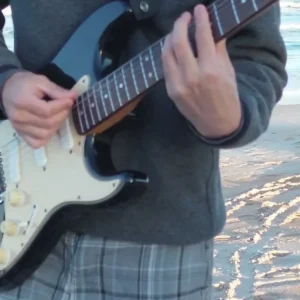
My guitar and I have been having a blast looping Sting’s classic hit “Englishman in New York” at our beachside sessions. The iconic song’s new wave vibe pairs perfectly with the laid-back atmosphere of our seaside setup. By capturing the percussive foundation, bassline, harmony, and lead elements live on my loop station, I can create a full-band sound without any backing tracks or distractions.
Ready to Raise the Bar on your playing? If you are looking to master the One Man Band process or find loop building videos for other songs, check out more live loop tutorials.
Explore other Intermediate Live Loop Tutorial loops


Explore other loop covers of Sting
No videos available.

