
Save The Population Guitar Loop: Unleashing 2000s Rock Frenzy
Save The Population is a certified rock anthem that catapulted Red Hot Chili Peppers into the stratosphere of legendary bands. Born in the late 90s and early 2000s, this song embodies the era’s infectious energy and swagger. With Anthony Kiedis’ signature vocals and Flea’s thunderous basslines, this track has stood the test of time, captivating audiences worldwide. Its live looping potential is undeniable – just imagine a single player conjuring an entire band’s worth of sound, with my guitar serving as both lead instrument and backing tracks. That’s exactly what makes Save The Population Guitar Loop such an epic jam: let’s dive into the details!
The Engineering Behind the Art
To create a professional Full Band sound with just one guitar and one loop station, you need to understand how to stack sound. It starts with a rhythmic foundation – percussion on the strings – followed by bass, harmony, and lead layers, all captured and repeated in real-time. I’m currently working on my Save The Population Guitar Loop, where I’m experimenting with different rhythmic cells and layering techniques to create a full band arrangement.
The key is finding that sweet headroom between clarity and distortion, so your sound isn’t too chunky or too clean. A glassy tone is essential for this type of music, and it all comes down to the interaction between my guitar, loop station, and processing settings. Red Hot Chili Peppers’ improvisational solos are a great example of how to take live looping to the next level – Anthony Kiedis’s raw energy and Flea’s funky basslines are the perfect inspiration for this type of music. By understanding the engineering principles behind live looping, you can create a professional Full Band sound that will leave your audience wanting more.
The Power of One Guitar
The one-guitar constraint might seem like a recipe for disaster, but trust me, it’s been the secret sauce behind some of my most epic live looping performances. When you’re forced to rely on just your own two hands, creativity kicks into high gear. It’s all about making every sound count – no room for unnecessary embellishments. With my guitar and loop station as my only tools, I’m like a master chef with an endless kitchen, whipping up complex arrangements from scratch.
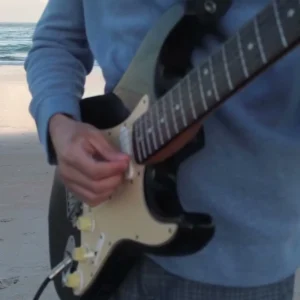
I recall the time I recorded Save The Population Guitar Loop on this very beach; it was a true exercise in one-guitar wizardry. Fiddling with my guitar’s EQ to squeeze out every last bit of headroom, I conjured up a soundscape that would put even the Red Hot Chili Peppers’ improvisational solos to shame – minus the backing band, of course! It’s when you tap into your inner engineer and understand how constraints can spark innovation.
Why Constraints Make Better Music
Live looping’s a great example of how limitations can spark innovation. With only my guitar and loop station, I’m forced to think outside the box – or in this case, the instrument. When you’re working with a single source, every decision counts. That’s why when I created Save The Population Guitar Loop, I chose to focus on the core elements that make it tick: chunky rhythms and pocket-perfect grooves.
By stripping away excess, I was able to tap into my inner improvisationalist – much like Flea’s legendary Red Hot Chili Peppers improv sessions. When you’re not worried about being perfect, you start to listen in new ways. The result is a sound that’s both raw and refined – thanks to the freedom of live looping. With every overdub and layer added, I gain more headroom for creativity, pushing me further away from perfection.
Chasing the Melody: Improvising Over Save The Population
When I’m lost in the rhythm of my guitar and loop station, time becomes relative. To solo over a live build like this, you need to tap into that sweet spot where focus meets freedom – it’s all about finding the right headroom for your ideas to breathe. With every chord change or rhythmic variation, you’re essentially writing new material on the fly.
The cloudy skies above seem to match the melancholic vibe I’m aiming for in this piece. The lack of clear direction allows me to explore different sonic territories – minor keys and modal interchange become my playground. Red Hot Chili Peppers’ improvisational solos are a big inspiration here; Flea’s ability to create space within a song while still serving the rhythm is something I strive for.
As I build upon each loop, the arrangement starts to take shape – it’s like uncovering hidden patterns in the music. With every new layer added, I’m constantly reevaluating what works and what doesn’t, making sure that my guitar stays true to the mood I’ve set out to convey.
The Power of Silence in a Busy Loop
Pauses and space are just as important to me as the notes I play. When you’re building up these massive loops, it’s easy to get caught up in filling every moment with sound – but trust me, that’s where the magic happens when you let some silence breathe.
By leaving room for air, you give yourself headroom to create something truly special. It’s like having a pocket in your playing where you can stash all your ideas and come back to them later with fresh ears. And when you’re improvising over these loops, it’s not just about what you play – it’s also about how you leave space for the listener to fill in themselves.
Take my latest Save The Population Guitar Loop – I was experimenting with some crazy time signatures and polyrhythms, but the real key to making it work was learning to trust those silences. By letting go of the need to fill every beat, I ended up creating this massive, driving sound that’s all about tension and release.
When you’re playing live looping, it’s easy to get caught up in trying to control every moment – but sometimes the best thing you can do is step back and let the music take over.
The Freefall Moment of Improvisation
When I’m locked into a groove on my guitar, and the loop station is humming away, it’s like being dropped down a rollercoaster. My mind lets go of all the logical thinking, and I’m left with just the music – the notes, the rhythms, the vibes. It’s an incredible feeling of freedom, like I’m not even playing anymore; my fingers are just channeling the sound. The best part is when it starts to come together, and the whole arrangement feels like a cohesive beast, ready to devour the stage.
The Freefall Moment of Improvisation
The way John Frusciante’s improvisational solos with Red Hot Chili Peppers capture that same sense of release is truly inspiring. The way he seems to tap into this collective energy from the crowd, and lets it fuel his playing – it’s a beautiful thing to witness. When I’m building up my Save The Population Guitar Loop live, I try to tap into that same feeling, letting go of any self-doubt or analysis, and just letting the music take over.
Save The Population Guitar Loop – Red Hot Chili Peppers Improvisational Solos
There’s something about a live looping setup that makes it feel like you’re playing with an entire band. My guitar and my loop station become the foundation for every sound I want to make – from the rhythmic cell of the drums on the strings, to the bass notes that rumble beneath everything. It’s not uncommon for me to find myself in a Red Hot Chili Peppers improvisational solo, where the only thing between the guitar and the environment is my own creativity.
Want to hear where the loop goes when there is no plan? Every improvisation session is a different conversation between the guitar and the environment — explore more live loop improvisations and see what comes out.
Explore other Intermediate Live Loop Improvisation loops
Explore other loop covers of Red Hot Chili Peppers
No videos available.

