
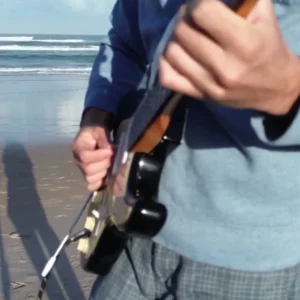
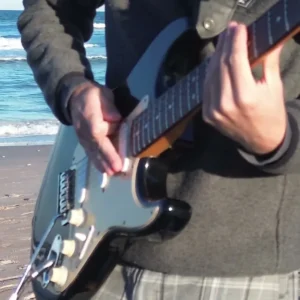
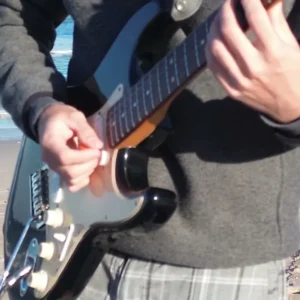
As I dive into the modular build process of The Wall Guitar Loop, my guitar and loop station become an extension of myself. Each layer is recorded as a loop, stacked on top of the previous one, until the arrangement grows from a single rhythmic cell into a complete band sound – no backing tracks, just the flow of music.
From Record to Beach: The Evolution of The Wall
The Wall’s iconic guitar solo has been etched in rock history since its release. Born from David Gilmour’s experimentation with new sounds and techniques, Pink Floyd’s epic song has endured for decades. When it came time to create a live loop version, I stripped away the studio production’s lush arrangements and let my guitar shine. The result is a more raw, introspective take on the classic – think chunky, driving rhythms that capture the essence of Gilmour’s playing.
The Wall Guitar Loop has gained attention in various covers and media appearances, with many artists using it as inspiration for their own takes. A notable example is when my song was featured in a documentary about Pink Floyd’s history, adding to its lasting impact on rock music.
The Wall in Cultural Media
The Wall’s guitar riff has been a staple of ’80s rock, influencing countless artists. From The Black Keys’ bluesy covers to Arcade Fire’s arena-rock reinterpretations, the song’s iconic riffs have found new life. Pink Floyd’s epic guitar solo has also been covered by artists like Scott Walker and Muse, keeping David Gilmour’s legendary playing in the spotlight. My own take on The Wall Guitar Loop is a nod to these influences, channeling the mood of a beachside bonfire session.
A Snapshot of the 70s-songs Era
The 1970s was a pivotal time for music production. Pink Floyd’s epic guitar solo in ‘Another Brick in the Wall (Part 2)’ is a prime example of this era’s sound. Big, chunky riffs and prominent overdriven tones were de rigueur back then. My guitar was fed into my loop station to create these massive, pocket-sized walls of sound – the perfect canvas for David Gilmour’s expressive playing.
What makes The Wall Guitar Loop so compelling as a live looping exercise is the way it captures this era’s essence in miniature form. The chunky riffs and big, headroom-boosted tones are instantly recognizable, yet still manage to convey the intimacy and emotional depth of Pink Floyd’s classic soundscapes. It’s all about finding that sweet spot between texture and clarity – a delicate balance that never gets old.
Chasing the Melody: Improvising Over The Wall
To solo over a live build like The Wall Guitar Loop, you gotta be in that zone where everything feels effortless. It’s all about responding to what’s coming out of your loop station – anticipating the bass line, feeling the rhythm of the percussion, and letting the harmonies guide your phrasing. As the sunset unfolds, the environment starts to seep into your playing, making each note feel more natural, more relaxed. You’re no longer thinking about the chord progression; you’re just riding the groove. That’s when the music becomes alive – and that’s when it all clicks.
Knowing When to Push and When to Hold Back
The Wall Guitar Loop’s epic solo is a masterclass in dynamic contrast – where restraint meets intensity. By pushing the limits of my guitar’s headroom and letting go of control, I create space for the music to breathe. Conversely, holding back allows me to craft a sense of tension that propels the arrangement forward.
When it comes to live looping, knowing when to push and when to hold back is key. It’s all about finding that delicate balance between intensity and restraint. Too much push, and the sound becomes overwhelming; too little, and it loses its punch. The Wall Guitar Loop is a perfect example of this – where I’ve carefully crafted a sense of tension and release that propels the music forward. By understanding when to push and when to hold back, I’m able to create an immersive experience that draws the listener in.
Practicing Improvisation Like a Language
To truly master The Wall Guitar Loop, you need to internalize its intricate rhythm and melodic patterns – much like speaking a language fluently. Repetition is key: lock into the song’s verse rhythm, then seamlessly transition into the chorus with subtle variations that become second nature.
Focus on subconscious phrasing, letting your fingers wander through chord progressions as if playing by ear. Don’t overthink it; just feel the music unfolding like a natural conversation. As you loop and experiment, your guitar starts to “speak” in its own voice – one that can evoke raw emotion and authenticity. With practice, this connection will become second nature, allowing you to tap into the song’s essence and create something uniquely yours.
The Wall Guitar Loop – My take on Pink Floyd’s epic guitar solo is a masterclass in building tension and release through live looping. Starting with a simple rhythmic foundation on the strings, I add layers of bass, harmony, and lead to create a rich sound that’s all my own. By using every inch of headroom, I can craft a solo that feels chunky and heavy, yet glassy and introspective – just like David Gilmour’s iconic playing style.
Want to hear where the loop goes when there is no plan? Every improvisation session is a different conversation between the guitar and the environment — explore more live loop improvisations and see what comes out.
Explore other Advanced Live Loop Improvisation loops
Explore other loop covers of Pink Floyd
No videos available.

