
Couldn’t Stand the Weather Guitar Loop – A Minimalist Reimagining with a Modern Twist
I’m always up for a guitar challenge, and Couldn’t Stand the Weather by Stevie Ray Vaughan & Double Trouble was the perfect candidate. I stripped it down to its essence, using only my guitar and a loop station to recreate the iconic track. This minimalist approach highlights the song’s raw energy and lets the notes breathe – a far cry from the layered production of the original. By emulating every instrument from just the strings, I’ve created a pocket version of the band, where each layer is carefully crafted to enhance the overall sound, giving you a glassy sheen that’s unmistakably Stevie Ray Vaughan.
Couldn’t Stand the Weather Guitar Loop
This raw blues-rock epic uses a killer combination of palm-muted rhythms and crunchy lead playing to cut through the mix. I’ve got my guitar dialed in with a chunky rhythm setup that’s all about feel – think Stevie Ray Vaughan’s signature sound, minus the fancy pedals. The result is a low-end heavy foundation that lets me concentrate on the lead work. My loop station takes care of the backing vocals and harmonies, blending seamlessly into the instrumental layers. It’s music to my ears!
Exploring the Setup Separately
Tinkering with amp and loop station settings can be just as important as mastering that face-melting solo. When you focus on finding your sweet spot in one area, it’s like unlocking a secret world within the guitar – and that’s exactly what I did when working on my ‘Couldn’t Stand the Weather’ guitar loop. For me, this means experimenting with tone until it feels almost otherworldly.
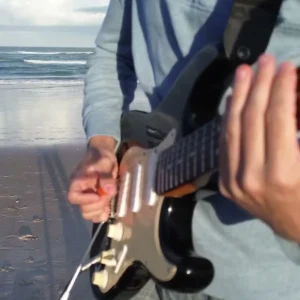
I recall spending hours in my beachside studio, tweaking everything from the overdrive to the loop station’s effects, just to find that perfect balance. And let me tell you, it’s not just about getting a ‘good’ sound – it’s about creating space within your music for the right notes to breathe. When I finally landed on the setup that made my guitar sing like Stevie Ray Vaughan, I knew I was onto something special.
The key is to understand how each element interacts with the other. The amp settings can either enhance or suffocate the loop station’s capabilities, depending on your approach. By exploring both independently, you’ll unlock new possibilities for layering and texture. Take it from me – when that ‘Couldn’t Stand the Weather’ riff started coming together, I knew I had found my pocket, and nothing else mattered but making it shine with every single note.
The Guitar as a Sound Laboratory
Rhythm guitar’s low-frequency focus creates a punchy attack when palm-muted downpicking locks in with percussion. The tighter the muting, the more aggressive it feels – essential for hard rock, blues rock, and heavier pop arrangements. Funk and rhythm-forward pop call for high-frequency strumming with percussive muting.
Experiment with chunky rhythms to add texture, and explore glassy playing styles for a brighter attack. Fingerstyle percussive techniques bring warmth and complexity, while fingerstyle arpeggios create an open, acoustic character – perfect for adding harmonic detail without density. In a live looping context, this translates into a versatile sound that can adapt to any arrangement.
The key is to understand your guitar’s sonic capabilities – know when to use the attack you want, and when to let it breathe. For Stevie Ray Vaughan-inspired leads, focus on feel over speed, with wide vibrato and expressive phrasing. Rock lead can be melodic, shredding, or rhythmically aggressive depending on the context.
Understanding how your guitar responds to different playing styles is crucial for building a personal sound vocabulary – explore every contact point on the instrument, from strumming angles to string locations and pressures. Get comfortable with palm muting, and experiment with different techniques to find the right balance between attack and decay.
The Engineering Behind the Art
Live looping’s the art of stacking sound, starting with a rhythmic foundation on the strings – percussion, bass, harmony, and lead layers all captured in real-time. The setup’s a high-performance development environment for sound, where one guitar and one loop station become the blueprint for a professional Full Band sound. My guitar’s the key to unlocking this sound, with my loop station as the engine. A single rhythmic cell can grow into a complete band arrangement, no backing tracks or AI needed – just the raw power of human creativity.
Couldn’t Stand the Weather Guitar Loop
Stevie Ray Vaughan’s iconic ‘Couldn’t Stand the Weather’ is the perfect example of how live looping can breathe new life into classic rock. By combining my guitar with layers of percussion, bass, and harmony – all captured on the loop station – I create a full-band arrangement that would make SRV proud. The key to this sound lies in understanding how to balance headroom, chunky rhythms, and glassy leads. With practice and patience, you can master these techniques and unlock your own unique live looping sound.
Music as Iterative Design
When I’m stuck on a riff or struggling to find the right pocket, I take a cue from the world of software development. Looping For The Summer is all about building a Full Band sound in real-time, one layer at a time. I mean, who needs backing tracks when you’ve got a solid rhythmic foundation and some well-placed overdubs? My guitar’s got the chops to deliver a killer solo, but sometimes it takes a little experimentation with my loop station to find that perfect glassy tone.
I’m all about modular design in music – just like how I build a professional sound from scratch on one guitar and one loop station. It starts with body percussion and percussion on the strings, adding depth before layering on some chunky basslines. Then it’s harmony and lead time to get that full band feel. The key is finding that headroom in your mix – not too much or too little, just right.
My latest Couldn’t Stand the Weather guitar loop showcases how this process works. I start with a killer intro riff and build from there, adding layers on top of each other until it’s a complete song. No backing tracks needed – just me, my guitar, and my trusty loop station creating a live sound that’s bigger than the sum of its parts.
Couldn’t Stand the Weather Guitar Loop
[Insert video link]
Why Constraints Make Better Music
Live looping’s greatest strength lies in its limitations. I’m talking about those constraints that make you dig deep into your creative toolbox. When working with just one guitar and loop station, you’re forced to think outside the box – or in my case, outside the beach shack where I set up shop.
Stevie Ray Vaughan’s music taught me the value of restraint. By stripping away excess, he honed his sound into a razor-sharp pocket that’s still inspiring guitarists today. When I’m on stage, playing ‘Couldn’t Stand the Weather’ with just my trusty six-string and loop station, I feel like I’m channeling that same spirit of intensity.
The key is finding that sweet spot between headroom and feedback. Too much gain can be a crushing weight, but too little and you’re left with a lifeless, glassy sound. It’s a delicate balance that requires patience, but the payoff is worth it – a rich, textured arrangement that feels like it was conjured from thin air.
When I’m looping, I’m not just playing my guitar; I’m engineering a sonic experience that wraps around the listener like a warm blanket on a chilly summer night. And that’s where the real magic happens – when limitations spark innovation and take you to places you never thought possible.
Couldn’t Stand the Weather Guitar Loop
I’m stoked to be playing on a day like today – grey skies and a cool breeze are perfect excuses to stay indoors and get creative with live looping. Stevie Ray Vaughan would’ve loved this setup, and now I can share his guitar lessons in action. The rhythmic foundation is key: chunky, percussive rhythms on the strings provide the heartbeat for my arrangement.
Ready to Raise the Bar on your playing? If you are looking to master the One Man Band process or find loop building videos for other songs, check out more live loop tutorials.
Explore other Advanced Live Loop Tutorial loops
Explore other loop covers of Stevie Ray Vaughan & Double Trouble
No videos available.

