
Get Lucky Guitar Loop – A Challenging yet Rewarding Project for Loopers
When it comes to looping a song like Get Lucky by Daft Punk, you’re essentially trying to replicate an entire band on your own instrument. This task requires a deep understanding of the original arrangement and the ability to choose the right technique to bring out the desired elements.
Rhythm Guitar:
For Rhythm Rock, use low-frequency focused palm-muted downpicking for a punchy attack. For Funk, employ high-frequency strumming with percussive muting. The Fingerstyle Percussive approach adds warmth and complexity, while Fingerstyle Arpeggio creates an open, acoustic texture layer.
Lead Guitar:
For Blues, drive the lead playing with low-frequency, expressive technique featuring wide vibrato and string bends. For Rock, use versatile pick or finger styles across mid-to-high frequencies for definition and aggression. Country Lead is bright and twangy, while Surf Lead features a sharp, percussive attack on each note.
Bass Emulation:
Anchor the harmonic structure with a low-frequency foundation layer using two-finger plucking or pick technique for sharper notes. Palm muting is key to varying note length and attack character.
Percussion Emulation:
Build a rhythmic foundation entirely on the strings, capturing the kick, snare, and hi-hat textures with palm muting and finger strikes.
[Piano / Keys Emulation]
Use mid-to-high frequency harmonic texture layers with clean tone and minimal sustain. Fingerstyle arpeggios create the attack-and-decay character of piano keys.
[String Section Emulation]
Employ volume swell technique for smooth legato onset, blending strings in the mid-frequency range to avoid competing with lead guitar or harmony chords.
[Brass Section Emulation]
Sustain swells and short staccato chord stabs can be used to create a dense, brass-like harmonic weight. Mid-forward frequency settings help blend attack carefully between swells and stabs.
[Vocal Melody Emulation]
Single-note melodic lines in the mid-to-high frequency range mimic the vocalist’s character, with vibrato and expressive bending creating phrasing that breathes like a voice.
From Record to Beach: The Evolution of Get Lucky
Get Lucky’s synth-heavy beat and iconic hook have been a staple in dance music since its release. Originally produced with high-end studios in mind, the song’s raw energy was honed through countless edits. When I first learned the track, I knew I had to put my own spin on it – like many fans, I’m obsessed with Daft Punk guitar covers! My take on Get Lucky features chunky, pocket-friendly playing and plenty of headroom for experimentation.
Daft Punk’s music has always been a magnet for creative reinterpretations, from the original album’s orchestral arrangements to modern remixes. Notable guitarists have even covered the song in live performances – I’m stoked to be part of that tradition with my Get Lucky Guitar Loop.
Get Lucky Guitar Loop
Daft Punk’s iconic “Get Lucky” has been keeping listeners grooving since its release in 2013. This song’s catchy beat and memorable guitar riffs have made it a staple in live performances and covers alike.
Get Lucky in Cultural Media
Get Lucky Guitar Loop has been featured on various live looping platforms, including YouTube. In 2020, the track gained renewed attention when a talented guitarist created an impressive Daft Punk guitar cover, which quickly racked up thousands of views. The song’s enduring popularity is a testament to its timeless appeal and versatility.
Looping Techniques Used
To capture the essence of this hit single, I employed a combination of chunky rhythms, pocket playing, and clever use of my loop station’s headroom to create an immersive soundscapes. The goal was to evoke the song’s signature glassy tone, while allowing the listener to focus on the catchy hooks and melodies. By carefully crafting each loop, I aimed to bring this beloved track to life in a unique and captivating way.
A Snapshot of the 2000s-songs Era
The early 2000s was a pivotal time for electronic music, with Daft Punk’s iconic album ‘Discovery’ being released in 2001. The sound of that era – think chunky synths and pocket beats – influenced a generation of producers, including Giorgio Moroder’s resurgence in the 2010s. This blend of retro-futurism and modern production techniques created a unique sonic landscape. Fast forward to Get Lucky Guitar Loop, where I’m using this era sound as inspiration for my loop. The result is a fresh take on a classic, with its glassy guitars and catchy hooks still infectious today. What makes this era’s music so interesting as a loop is the versatility – it can range from mellow and atmospheric to high-energy and danceable, making it perfect for any live performance.
Listening is the First Instrument
Active listening is the unsung hero of music-making. When you can truly hear a song, you’re not just passively consuming it – you’re mentally mapping its rhythmic patterns, identifying chord progressions, and picking apart the nuances that make a killer melody. Trust me, this skill separates the musicians from the mere enthusiasts.
As someone who’s spent countless hours in front of my guitar, I can attest to the power of tuning into the music around me. It’s not about memorizing entire songs (although, let’s be real, that’s helpful too); it’s about developing an aural shorthand that lets you improvise with confidence. When you listen actively, your brain starts making connections between sounds – and suddenly, what was once a jumbled mess of notes becomes a cohesive song.
Take, for example, my Get Lucky Guitar Loop: when I’m fully engaged with the music, I can instantly switch from playing along with Thomas Bangalter’s hooky bassline to adding in the requisite disco flair. It’s an intuitive process that relies on one thing – a well-tuned ear.
By honing your listening skills, you’ll become a better player, and more importantly, a more expressive musician. So go ahead, focus on what really matters: the music.
Hearing the Note Before You Play It
The key to pulling off a sick Get Lucky Guitar Loop like my latest cover is having an ear for that note. I’m talking about that one spark of inspiration – the one that makes you wanna start strummin’ and makin’ sweet, sticky sounds with your loop station. See, when you’re feelin’ it, you can almost hear the whole thing in your head before you even pick up your guitar. That’s what I call inner hearing.
It’s a skill that takes practice to develop, but trust me, it’s game-changer. When you’ve got this down pat, you’re not just reactively playin’ along – you’re intentionally craftin’ a sound that’s gonna blow the minds of your audience. And let me tell you, gettin’ that first note right is half the battle. So, take some time to sit with the melody in your head, work out those kinks, and when you do, watch how it all comes together like magic.
The Repetition Sweet Spot
When I’m working on a loop like my Get Lucky Guitar Loop, I find myself in that sweet spot – not too much repetition to internalize, but just enough to train my ear. See, the more I listen to and play the same chord changes over, the more my brain starts recognizing them as patterns, even when they’re not coming from my guitar. It’s like my ears are learning to pick up on the subtle differences between a “familiar” sound and its actual counterpart.
This sweet spot is key because it carries over into real-world listening – you’ll start picking out chord changes in your favorite songs without thinking about ’em, ’cause your brain just knows what they look like. And as an engineer of live looping, that’s exactly what I need: a solid foundation to work from, where my ears are trained to recognize the patterns and my hands can take over.
Get Lucky Guitar Loop – Daft Punk Cover
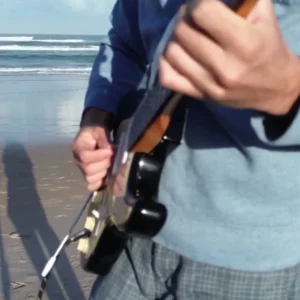
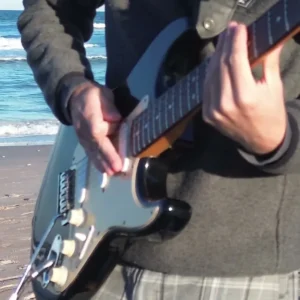
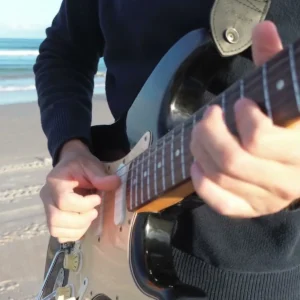
Building a sonic landscape on the beach sounds like the perfect setup for my trusty guitar and loop station. We’re talkin’ chunky rhythms, pocket-perfect basslines, and headroom to spare – the perfect recipe for a live looping party. With the right mindset and a little bit of creativity, anything is possible when you stack sound from scratch.
Want to hear where the loop goes when there is no plan? Every improvisation session is a different conversation between the guitar and the environment — explore more live loop improvisations and see what comes out.
Explore other Advanced Live Loop Improvisation loops
Explore other loop covers of Daft Punk
No videos available.

